Morgan Wagner · 30 September 2026
The Surprising Ways Leaf Pigments Have Shaped Natural Dye Traditions in Textile Communities Worldwide
Leaf pigments such as chlorophyll derivatives, carotenoids, and flavonoids have influenced dye practices across textile communities for centuries, with specific extraction methods and application techniques documented in regions from East Asia to West Africa and the Andes. Researchers at botanical institutions note that these compounds yield colors ranging from yellows and greens to browns when processed through fermentation, mordanting, or solar exposure, while communities integrate them into cotton, silk, and wool fibers using locally available plants like mulberry, persimmon, and eucalyptus leaves.
Asian Textile Traditions and Leaf Extraction Methods
Communities in Japan have long utilized persimmon leaf tannins to create kakishibu dyes, where unripe fruit and leaf combinations undergo repeated oxidation cycles that produce durable brown and gray shades on hemp and cotton fabrics. Records from the Edo period describe how farmers in rural prefectures harvested leaves in late summer, crushed them with water, and allowed mixtures to age in wooden vats, resulting in fabrics resistant to fading under sunlight exposure. Similar approaches appear in parts of India, where communities in Rajasthan and Tamil Nadu process leaves from the Indian mulberry tree to generate yellow and green tones, often combining them with iron mordants derived from local soils.
Data from agricultural extension programs in these areas indicate that leaf harvest timing affects pigment concentration, with peak flavonoid levels occurring just before autumn leaf drop. Textile cooperatives in these regions continue to maintain these methods, supplying markets with naturally dyed goods that meet export standards for colorfastness.
African and Middle Eastern Practices
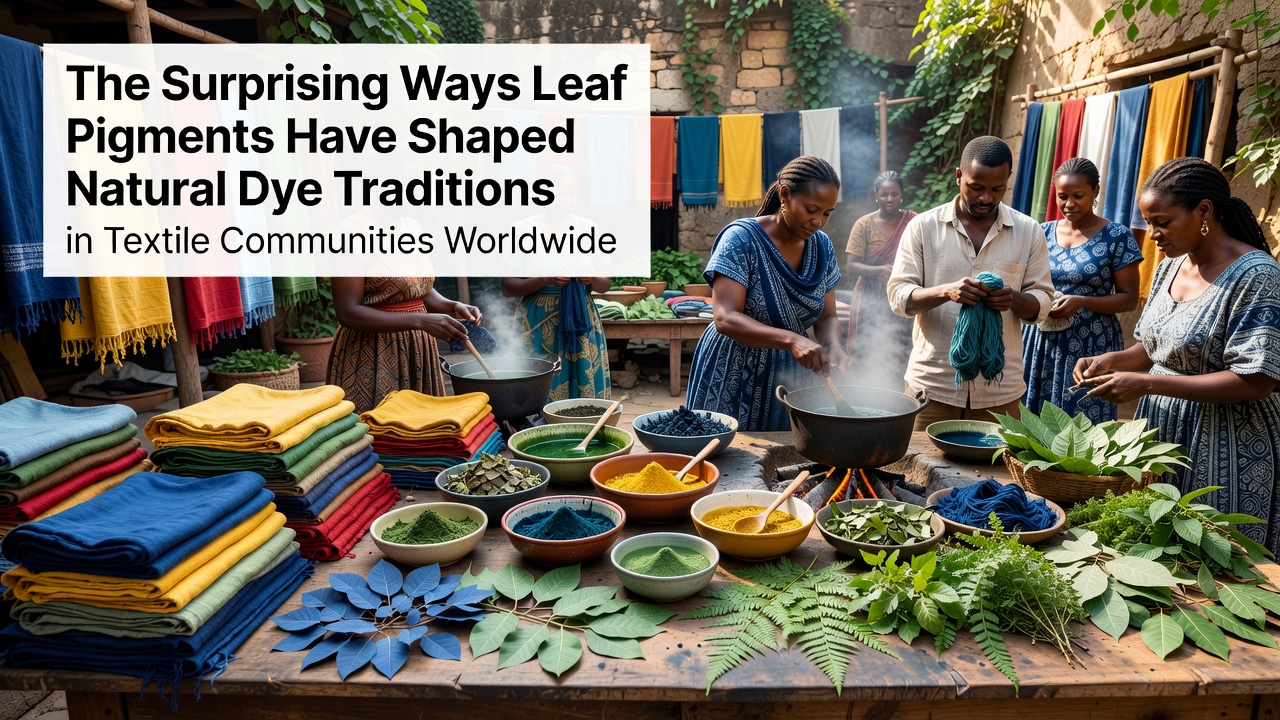
In West African textile centers such as those in Mali and Senegal, communities extract pigments from baobab and acacia leaves to supplement indigo fermentation vats, producing subtle green overtones on strip-woven cotton cloths. Artisans soak leaves in clay pots for several days, then strain the liquid before immersing fabric bundles, a process that relies on the natural pH shifts created by leaf tannins interacting with alkaline ash solutions. Ethiopian and Sudanese weavers have documented parallel techniques using leaves from local acacia species to achieve muted earth tones on wool and cotton, with patterns passed through family lineages that specify exact leaf-to-water ratios.
Studies conducted by regional agricultural research stations show that these leaf-based additives improve dye penetration in coarse fibers, reducing the need for imported synthetic auxiliaries in small-scale production.
Indigenous Traditions in the Americas
Communities in the Andean highlands of Peru and Bolivia have incorporated eucalyptus and walnut leaf pigments into dyeing practices for alpaca and sheep wool, where chopped leaves are boiled with fabric and copper-bearing rocks to fix olive and khaki shades. Pre-Columbian archaeological textiles reveal early use of similar leaf materials, though contemporary groups adapt these methods with introduced plant species while preserving core mordanting sequences. In Mexico, Mixtec and Zapotec artisans process leaves from native trees alongside cochineal insects, creating layered greens that appear in ceremonial garments and market textiles.
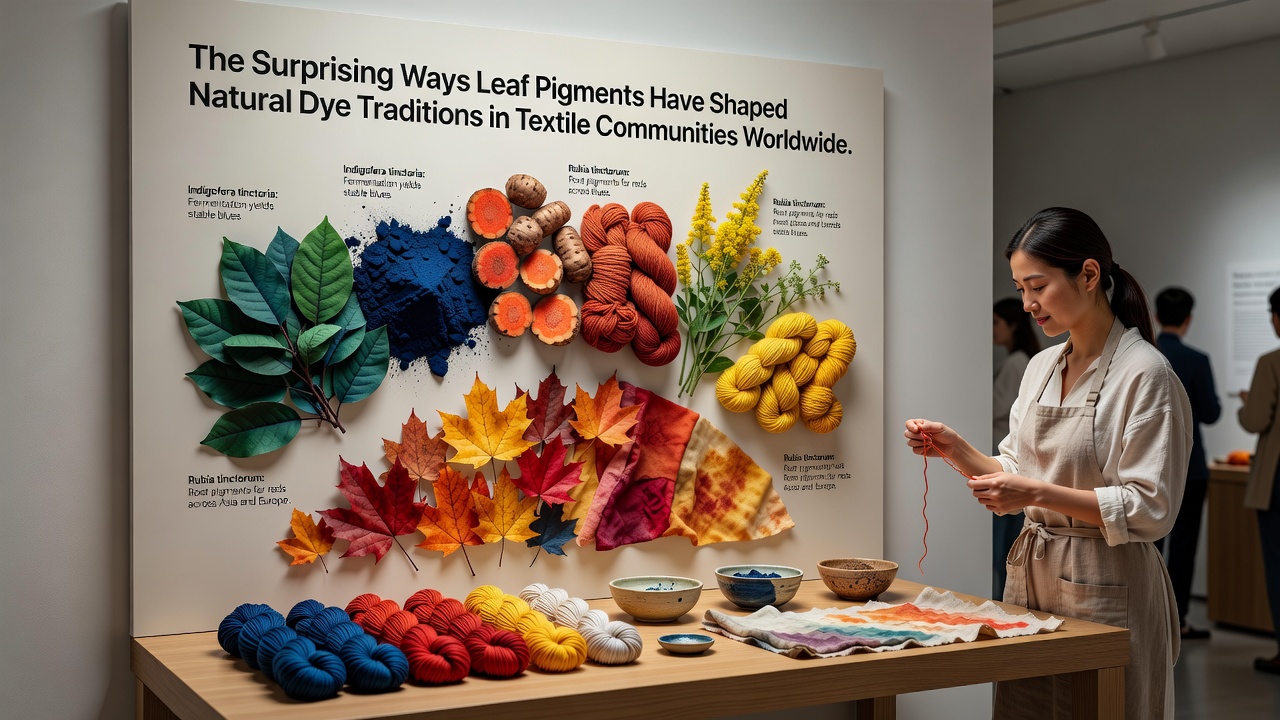
Ethnobotanical surveys by Latin American universities confirm that leaf pigment stability increases when fabrics undergo repeated sun-drying cycles after initial immersion, a step that communities integrate into seasonal production schedules.
Scientific Understanding and Pigment Chemistry
Analytical work at chemistry departments across multiple continents demonstrates that leaf carotenoids break down into yellow-orange compounds under heat and oxygen, whereas chlorophyll residues contribute temporary greens that shift to browns during oxidation. These transformations explain why many traditional recipes specify precise boiling times and post-treatment exposures. Research teams have isolated specific flavonoid structures responsible for the lightfastness observed in historical samples, providing data that modern conservators use when restoring museum textiles.
International botanical networks report that climate variations affect pigment yields in source plants, prompting some communities to adjust harvest calendars and experiment with shade-grown varieties to maintain consistent output.
Contemporary Applications and Knowledge Transmission
Textile education programs in Australia and Canada have incorporated leaf pigment workshops into curricula at craft institutes, drawing on techniques shared by visiting artisans from Asia and Africa. These sessions emphasize documentation of traditional recipes alongside laboratory verification of color outcomes, allowing participants to replicate results across different fiber types. In September 2026, several regional textile symposia are scheduled to feature demonstrations of leaf-based dyeing alongside discussions of sustainable sourcing practices.
Trade organizations focused on natural fibers track the volume of leaf-derived dyes entering commercial supply chains, with figures indicating steady demand from fashion brands seeking certified natural colorants. Community archives in multiple countries preserve oral instructions for pigment extraction, ensuring transmission to younger practitioners who combine ancestral methods with updated equipment such as temperature-controlled vats.
Conclusion
Leaf pigments continue to underpin dye traditions in textile communities worldwide through established extraction sequences, regional plant selections, and adaptive mordanting approaches. Data from agricultural and chemical studies support the observed color properties and durability of these materials, while ongoing educational initiatives maintain practical knowledge across generations. The documented practices reflect specific environmental conditions and fiber characteristics that shape outcomes in each location.