Sam Koch · 16 September 2026
Crafting Durable Leaf-Based Ornaments for Year-Round Home Displays Using Preservation Methods from Botanical Collections
Botanical collections maintain extensive records of leaf preservation techniques that extend the lifespan of plant materials for scientific study and display purposes, and those same approaches support the creation of durable ornaments suitable for continuous home use throughout the year. Researchers at institutions such as the Australian National Botanic Gardens document methods including air drying, pressing under controlled pressure, and glycerin infusion that replace natural moisture with compounds to prevent brittleness and fading. These processes allow leaves from various species to retain structural integrity when incorporated into wreaths, wall hangings, and tabletop arrangements that remain intact across seasonal changes.
Core Preservation Techniques from Herbarium Practices
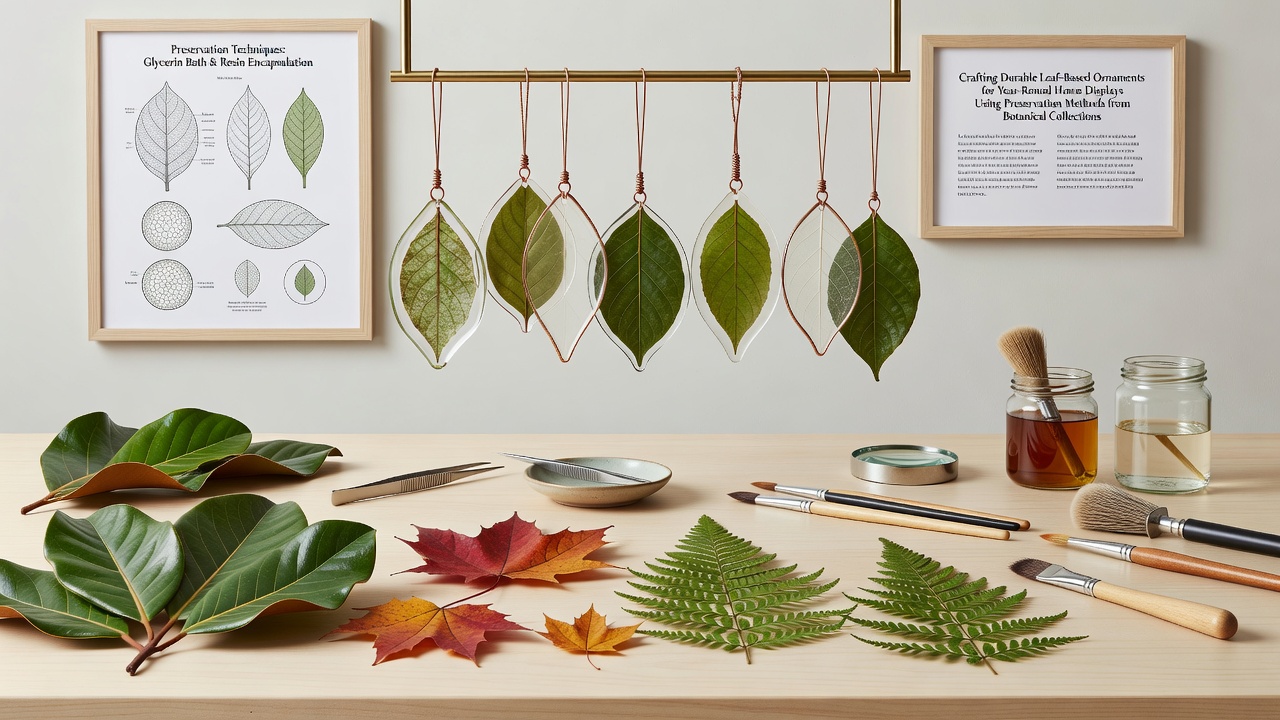
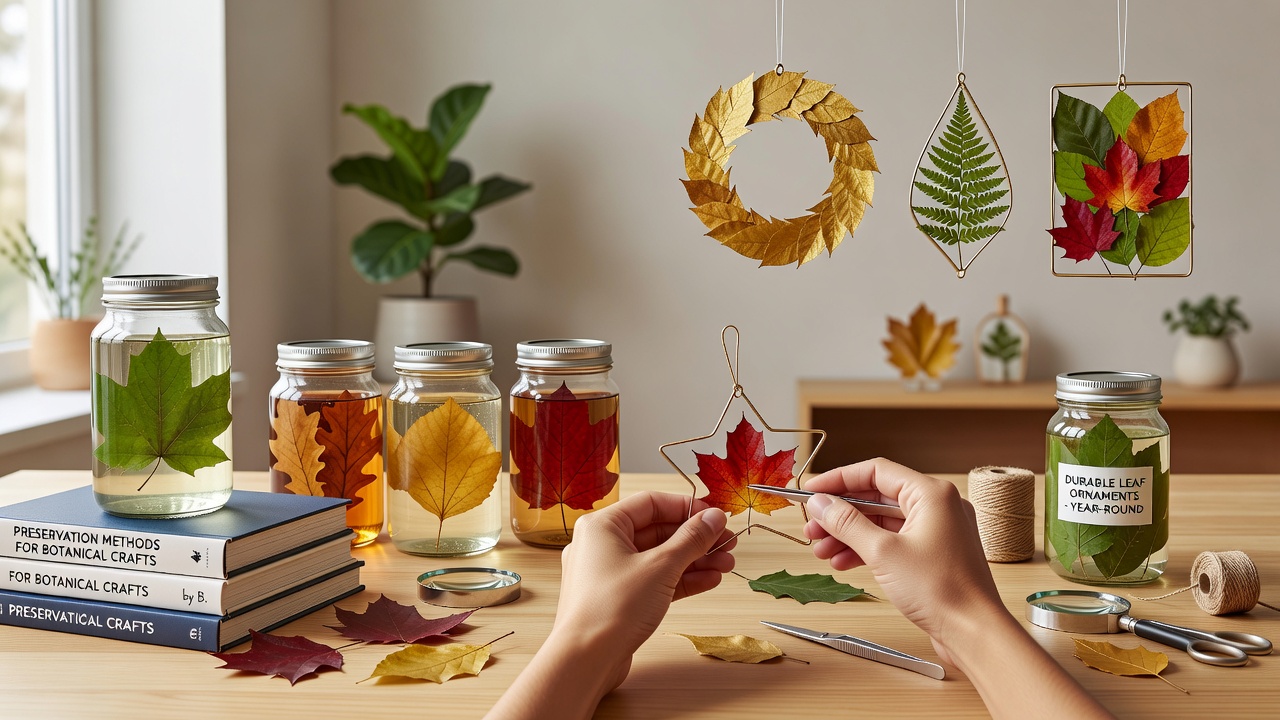
Herbarium standards emphasize initial selection of mature, undamaged leaves harvested during peak growing periods, followed by immediate processing to minimize cellular degradation. Air drying involves hanging bundles in low-humidity environments with consistent airflow, a step that typically takes two to four weeks depending on leaf thickness and ambient conditions. Pressing methods stack leaves between absorbent sheets under weighted boards or mechanical presses, which flatten specimens while extracting residual water and maintaining vein patterns for later assembly into framed pieces or mobile structures. Glycerin preservation submerges cut stems in a diluted solution that permeates vascular tissues, resulting in flexible material that resists cracking even after months of exposure to indoor lighting and temperature fluctuations. Data from university extension programs indicate that glycerin-treated foliage maintains color stability for twelve to eighteen months when stored away from direct sunlight prior to crafting.
Materials and Preparation Steps
Those assembling ornaments begin with leaves collected from deciduous trees such as oak, maple, and beech alongside evergreen varieties including eucalyptus and magnolia, all sourced from managed botanical sites to ensure ethical harvesting. Additional supplies include floral wire, archival glue, wooden frames, and clear sealant sprays that provide an outer barrier against dust accumulation. Preparation requires cleaning surfaces with soft brushes to remove debris, followed by sorting according to size and flexibility ratings established in collection protocols. Observers note that combining multiple preservation types within one project creates visual contrast, for instance pairing pressed flat leaves with glycerin-treated specimens that retain three-dimensional form.
Assembly Methods for Long-Term Displays
Construction follows modular steps where preserved leaves attach to wire bases or backing boards using techniques adapted from exhibition mounting practices at facilities like the Canadian Museum of Nature. Wire wrapping secures stems in circular or linear patterns for hanging pieces, while layered gluing builds depth in shadow boxes that protect delicate edges from handling. Sealant application occurs after assembly in thin coats that cure fully between layers, creating a protective film documented to reduce moisture absorption in controlled environment tests. People working with these materials often incorporate natural elements such as twigs and seed pods preserved through the same glycerin process to produce cohesive arrangements that transition seamlessly from summer greens to autumn tones without requiring seasonal replacement.
Maintenance and Storage Considerations
Regular dusting with microfiber cloths and avoidance of high-humidity areas extend the functional life of finished ornaments, aligning with guidelines issued by the U.S. Department of Agriculture Forest Service for long-term plant specimen care. When not on display, items store in acid-free boxes with silica packets to regulate internal conditions, a practice that mirrors archival storage in major collections. Research indicates treated leaves show minimal color shift after repeated exposure cycles when these protocols remain consistent.
Conclusion
Preservation methods refined through botanical collections provide reliable pathways for producing leaf-based ornaments that withstand year-round indoor conditions, with each technique contributing specific durability characteristics that support varied design outcomes. Application of these established processes yields consistent results across different leaf types and assembly styles.